
X E C O N U D D I N
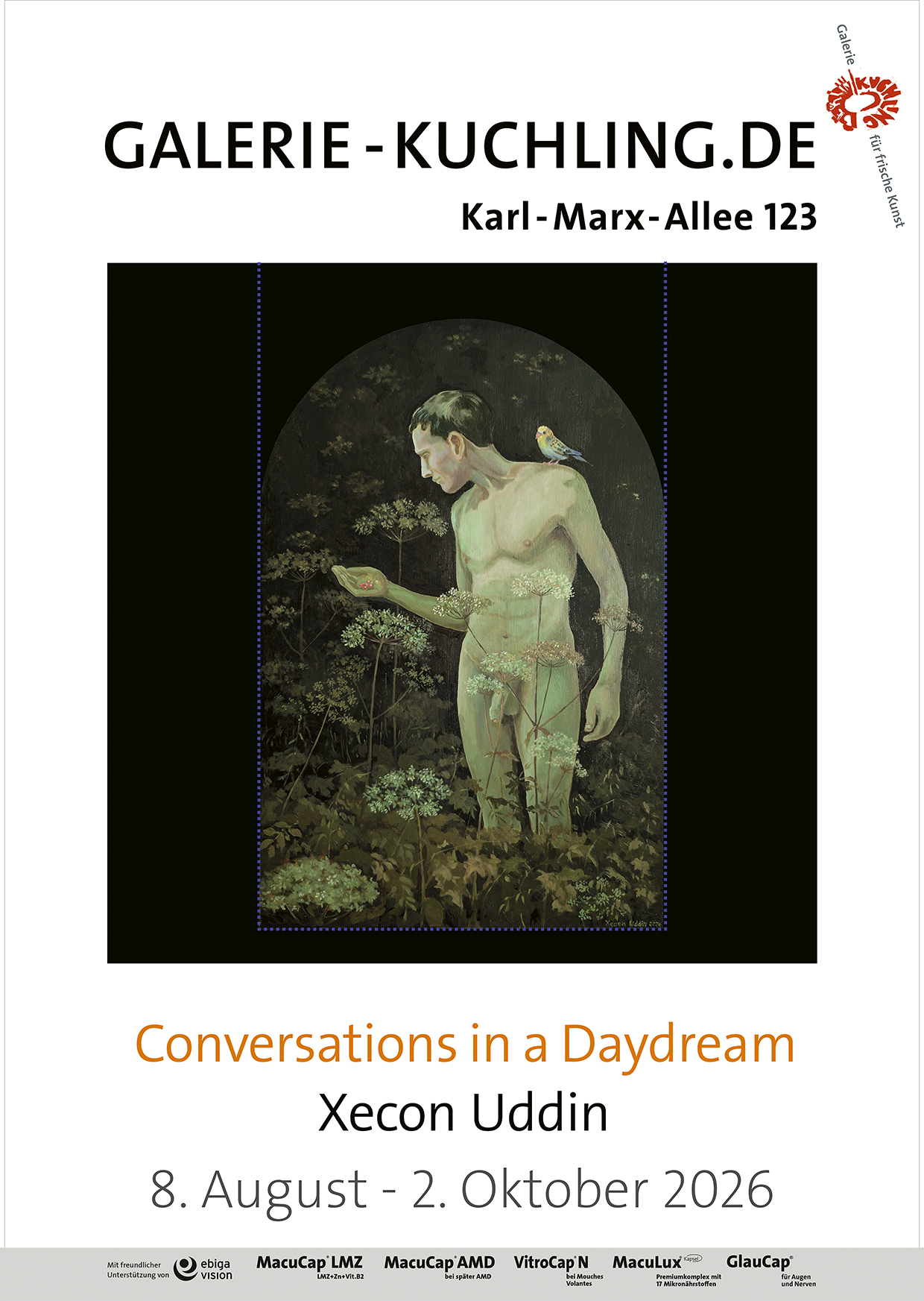
CONVERSATIONS IN A DAYDREAM
FINISSAGE
Fr., 02 October 6-10pm
Dear Friends of fresh Art,
We are delighted to have had the opportunity to present Conversations in a Daydream by Xecon Uddin over the past few weeks.
Following a successful exhibition, we would now like to come together once more to celebrate the art, the encounters, and all the special moments that have shaped this exhibition. We warmly invite you to join us for the
Finissage on Friday, October 2, from 6–10 pm.
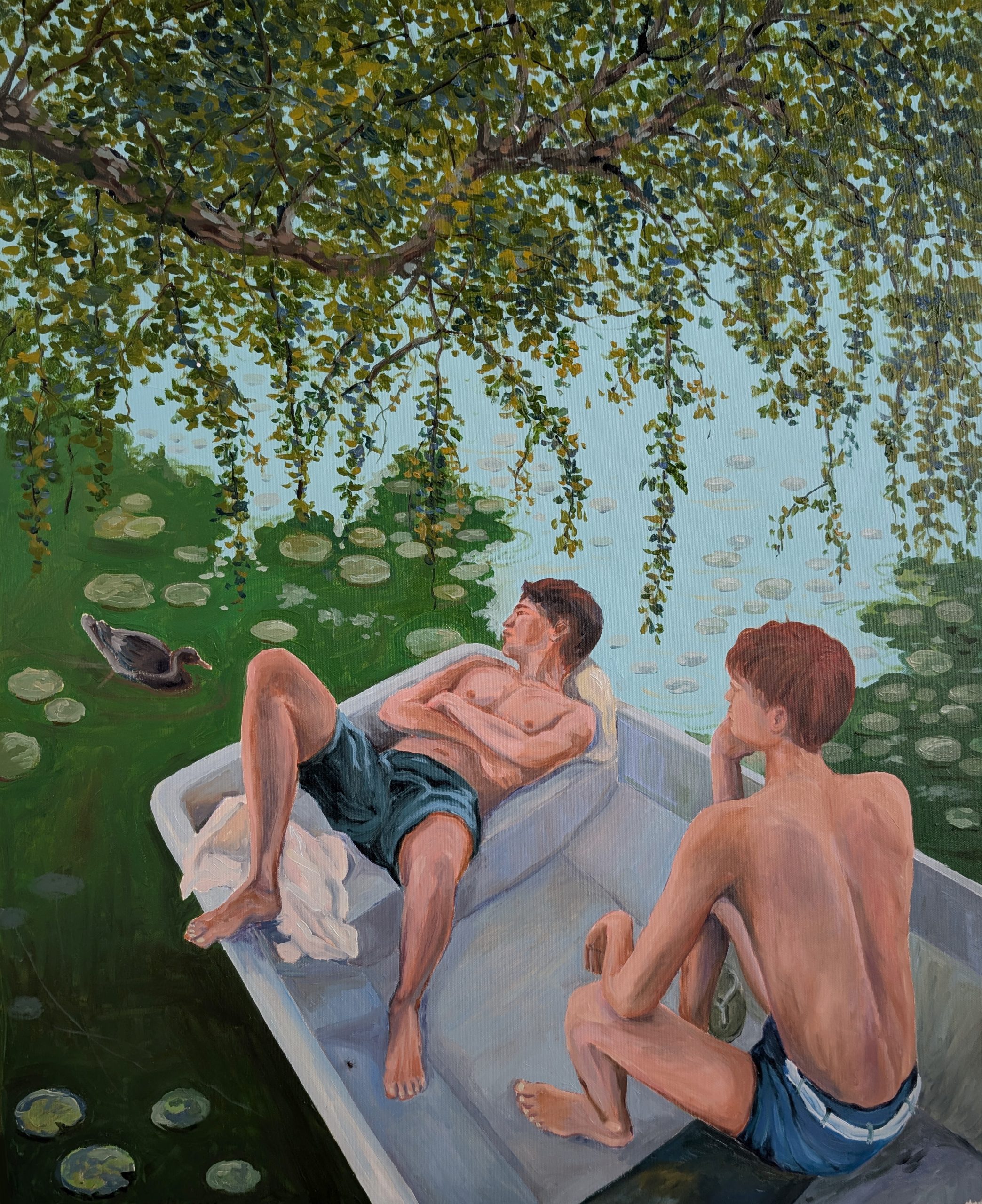
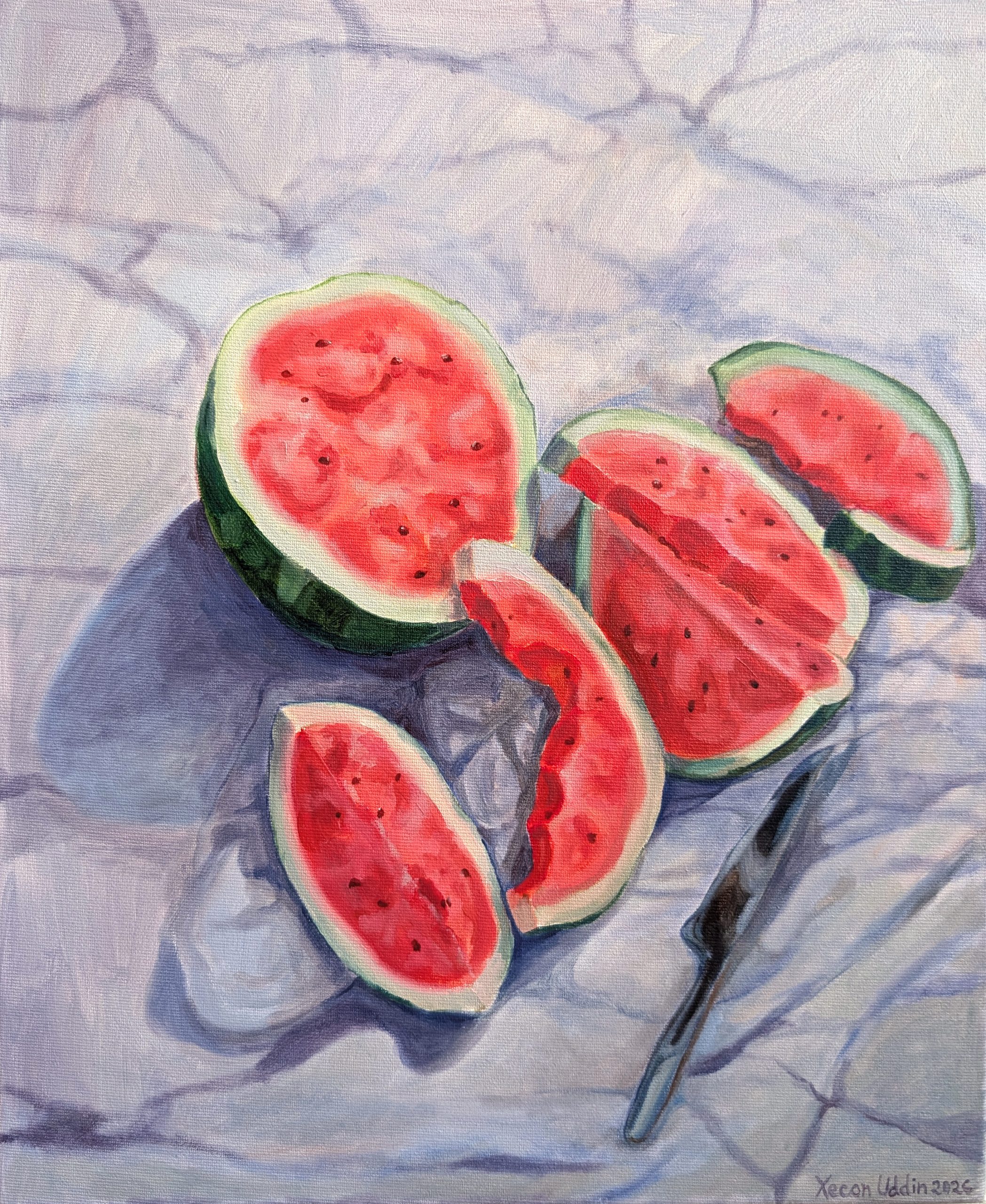
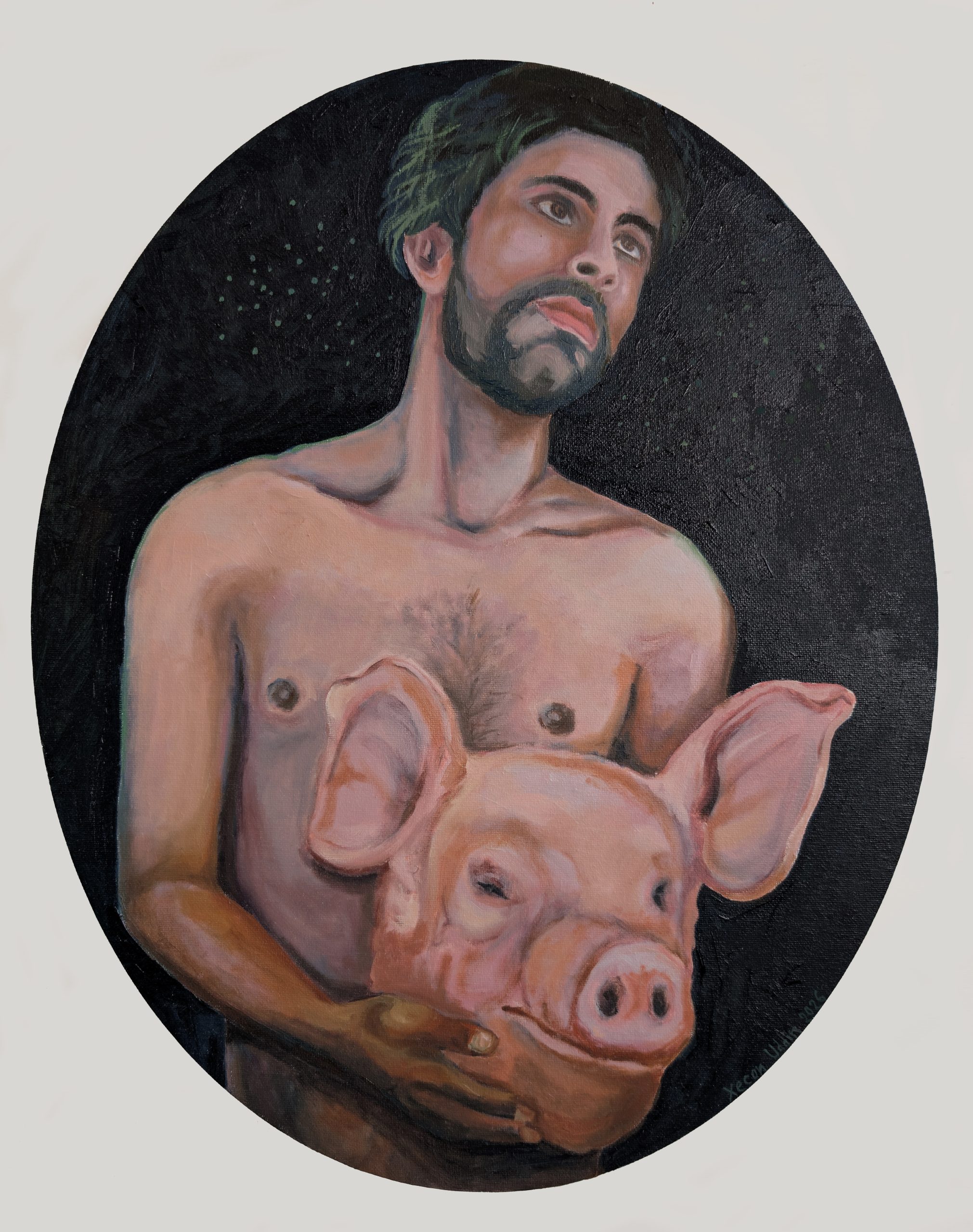
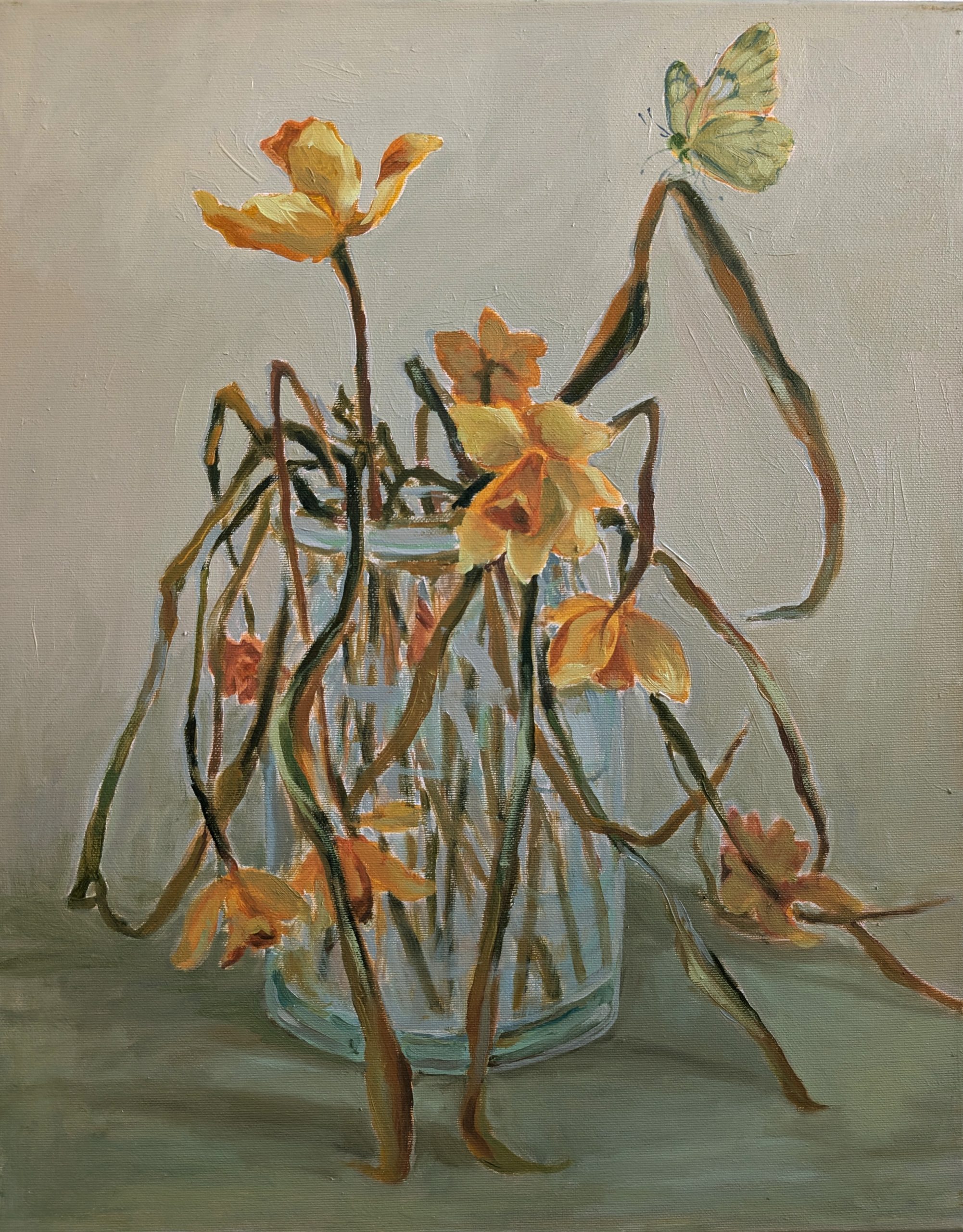
Conversations in a Daydream unfolds within a space between memory, desire, and quiet corporeality. Xecon Uddin’s paintings depict figures, animals, and vegetal forms in dreamlike transitions where intimacy is less narrated than felt. Touches remain implied, gazes linger, and time itself seems to slow down. His works open intimate pictorial spaces in which queer identity does not emerge as a fixed category, but rather as a fragile and living experience of connection, perception, and emotional closeness.
The exhibition title refers to the inner conversations that run throughout Uddin’s work. These are dialogues without language — between memory and longing, body and landscape, proximity and distance. His paintings do not depict specific events or stories. Instead, they unfold like daydreams: fragmentary, open, and sustained by a quiet intensity. The figures often appear in moments of pause, absorbed in thought or memory. They seem less occupied with their surroundings than with their own inner worlds, inviting viewers to slow their gaze and make space for emotions that resist clear definition.
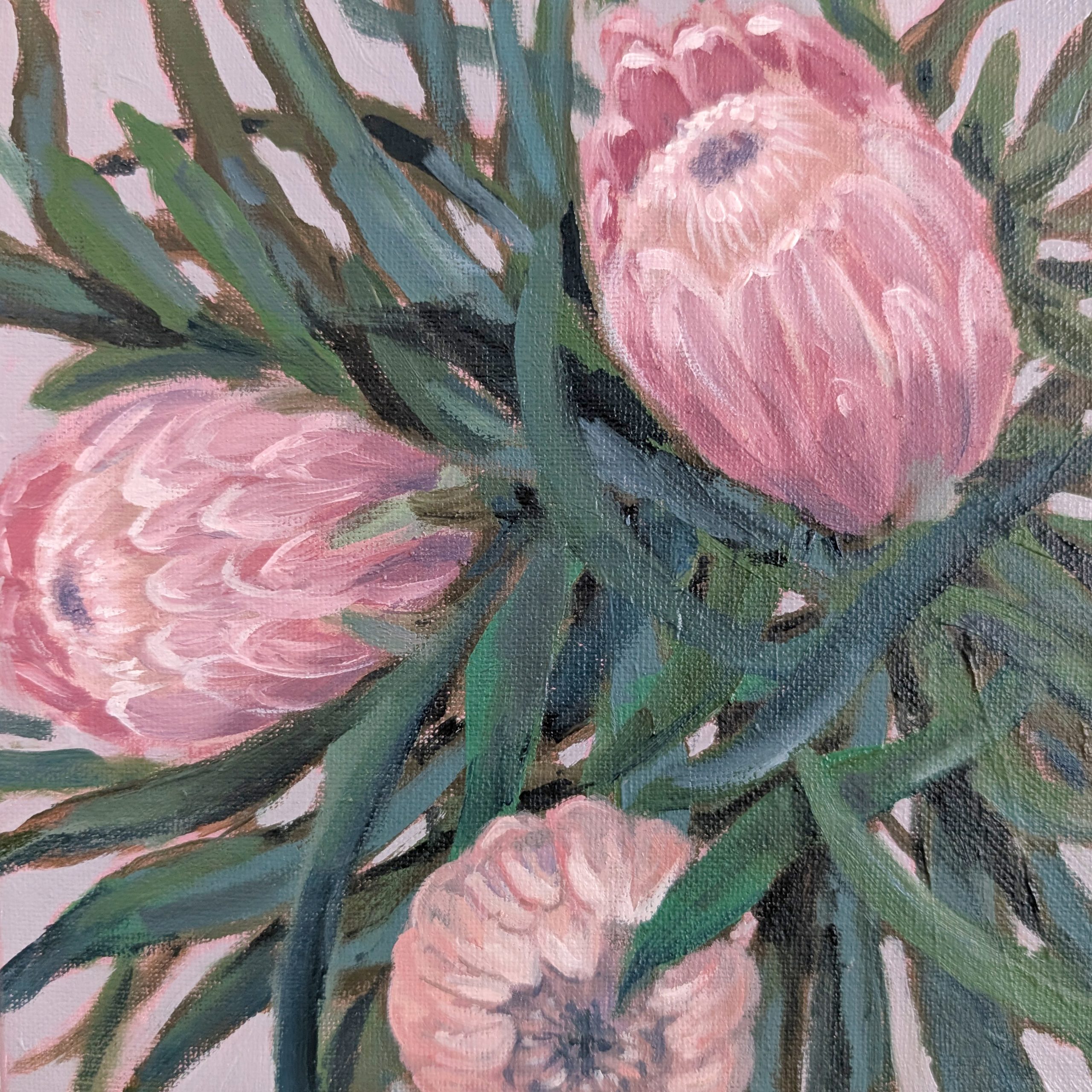
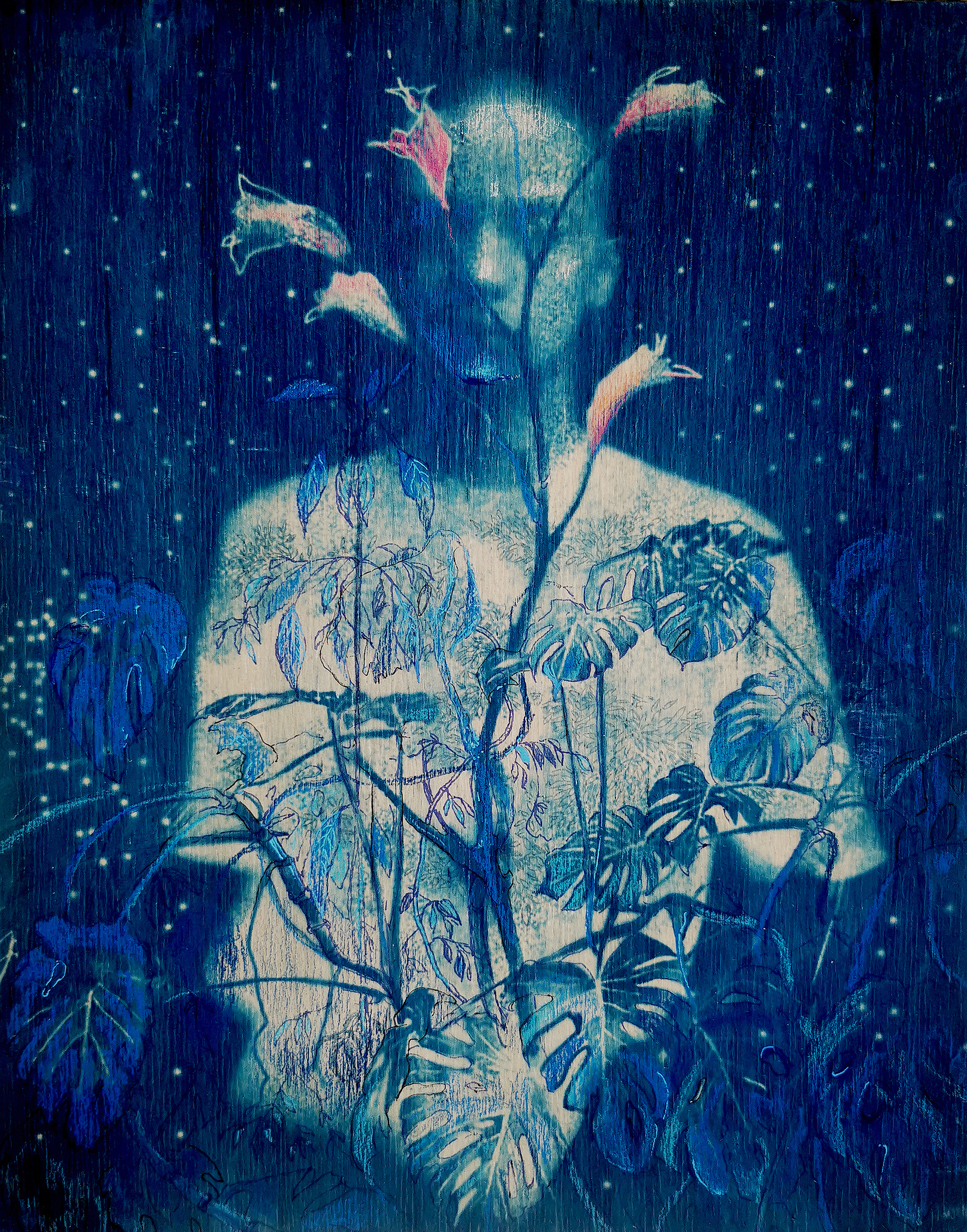
Bodies appear permeable, embedded within plants, animals, and chromatic in-between worlds that describe emotional and psychological states rather than actual places. Flowers, leaves, and organic forms function not as decorative elements, but as emotional chambers of resonance. They reflect longing, care, vulnerability, and desire, becoming visible carriers of inner experience. Human beings and nature enter into a quiet dialogue in which the boundaries between interior and exterior, memory and present reality, gradually begin to dissolve.
Between luminous fields of colour, dark pictorial spaces, delicate gestures, and vulnerable gazes, Uddin develops a painterly language that does not display intimacy, but carefully allows it to become visible. His figures encounter the world not through action, but through perception. It is precisely in their restraint that the works gain their particular presence. They speak of those moments in which identity, closeness, and self-awareness do not need to be explained, but are simply allowed to exist.
Born in Comilla, Bangladesh, Xecon Uddin has lived and worked in Paris since 2010. Following his studies in Fine Arts in Dhaka, he developed a multifaceted artistic practice that brings together painting, printmaking, ceramics, and experimental processes. Materials and techniques including lithography, aquatint, ink, acrylic, and cyanotype are explored not merely as formal tools, but as independent forms of expressing lived experience.
In their quietness, these works carry a particular form of resistance and hope. They insist on tenderness, vulnerability, and emotional openness within a present that often suppresses or threatens such states. Pain is not concealed, but transformed into something connective: closeness, care, and the possibility of seeing the world differently. Uddin’s figures linger in a state between dreaming and waking, where vulnerability appears not as weakness, but as a prerequisite for empathy, dignity, and mutual recognition.
His works do not construct an idealised alternative reality. Rather, they open a sensitive space for considering what forms of coexistence might emerge from emotional closeness, respect, and mutual visibility. They revolve around those quiet forms of self-assurance, affection, and connectedness that one follows, waits for, or extends to others. In a time of constant acceleration, they remind us that attention, care, and vulnerability can themselves become forms of encounter.
Text by J. Müller
We look forward to welcoming you!
… WHAT’S NEXT?
SVENJA SCHÜFFLER
DAS SCHOKOLADENMÄDCHEN VON BERLIN
Verwundete Meisterwerke
24 October – 8 January 2027
VERNISSAGE: 24 October 6-10 pm
